
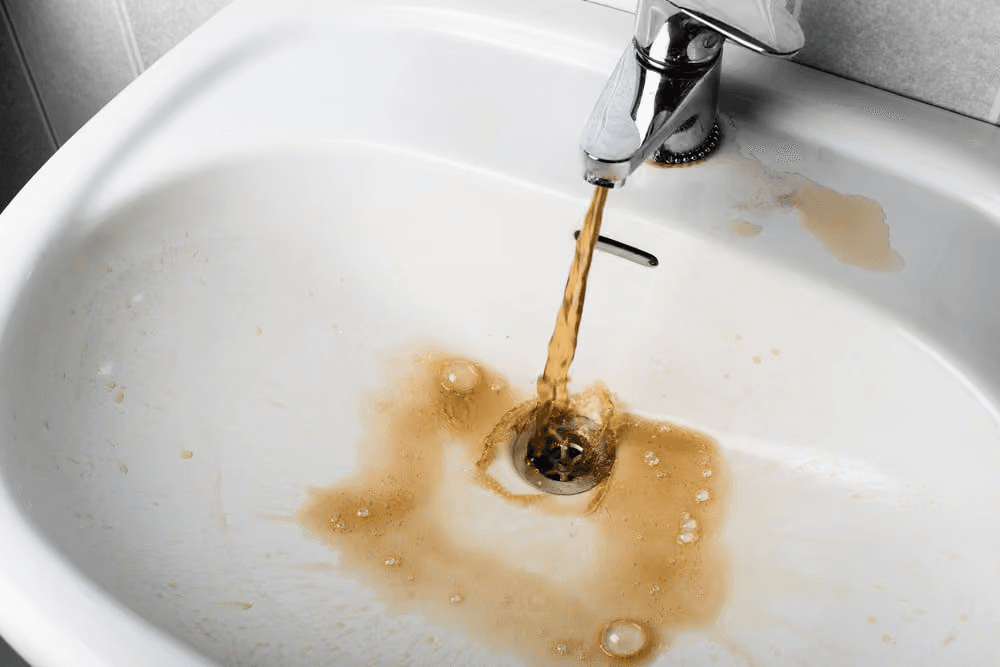
Brown water is typically caused by disturbed sediment, rust, or minerals in aging pipes, water mains, or water heaters. Identifying whether discoloration is isolated to a single fixture or present throughout the home helps pinpoint the cause. Quick solutions such as flushing cold water lines or cleaning aerators can often resolve temporary issues.
On this page:
Common Causes of Brown Water
What Brown Water Coming Out of Different Fixtures Can Tell You
How to Fix Brown Water Throughout Your Home
You Can Trust Hutchinson to Fix Your Home’s Brown Water
Frequently Asked Questions
Seeing brown water come out of your faucet, shower, bathtub, or toilet can be alarming for homeowners across South Jersey, eastern Pennsylvania, and northern Delaware. The good news is that brown water is often caused by something relatively straightforward, such as rust, sediment, or minerals being stirred up in your plumbing or water supply.
The important thing is to figure out where the discoloration is coming from. Brown water in just one fixture can point to a very different problem than brown water throughout your entire home.
Here are the most common causes of brown water in the home and what you can do to fix them.
Common Causes of Brown Water
Brown water is usually caused by rust, sediment, iron, or manganese. These materials can build up in water mains, household pipes, water heaters, or private wells. When water pressure changes or the buildup is disturbed, particles can get into the water and give it a yellow, orange, or brown appearance.
Common causes of brown water include:
Rusty or aging pipes: Older galvanized steel, cast iron, or other metal pipes can corrode and release rust particles into your water.
Water main work: Hydrant flushing, water main breaks, construction, or changes in water pressure can stir up sediment in municipal water lines.
Water heater sediment: If only your hot water is brown, sediment or corrosion inside the water heater may be the root cause.
Well water minerals: Private wells can contain naturally occurring iron and manganese that cause brown, orange, or yellow discoloration. Some minerals can also cause your water to give off a metallic smell.
Recent plumbing work: Repairs or changes to your plumbing can temporarily loosen sediment inside the pipes.
What Brown Water Coming Out of Different Fixtures Can Tell You
Where you see brown water can provide an important clue about the source and where you should start to fix it.
Where You See Brown Water | Most Common Causes | What to Check |
Toilet tank or bowl | Rusted tank components, sediment, or rusty supply lines | Check the tank and supply line. If other fixtures are clear, the issue may be isolated to the toilet. |
Sink | Rust or sediment in the faucet, aerator, or nearby pipes | Check whether the discoloration occurs only at that sink. Clean the aerator and run cold water. |
Bathtub | Water heater sediment or rusty pipes | Check whether hot, cold, or both water sources are discolored. |
Shower | Rust or sediment in the shower head or plumbing, or a whole-home issue | Check other fixtures and see whether the discoloration occurs with hot and cold water. |
One faucet only | Localized pipe corrosion, faucet, or aerator | Clean the aerator and compare the water with other fixtures. |
Every fixture | Well water, main plumbing, or water heater | Check hot versus cold water and compare results from fixtures across the home. |
One broader potential cause of brown water that can affect any fixture is a change in your home’s water source, such as the supply encountering a mineral deposit or naturally occurring sediment. In these cases, your water utility will typically notify you if there is a known issue or disruption affecting water quality in your area.
How to Fix Brown Water Throughout Your Home
The right fix depends on where the brown water is coming from.
If the Discoloration Is Temporary
Run a cold water faucet for about 5 to 10 minutes and see whether the water clears. You can also remove and clean faucet aerators, which may collect rust and sediment. Avoid running hot water while your cold water is discolored so you do not pull the discolored water into your water heater.
If Only One Fixture Is Affected
Clean the fixture's aerator or shower head and check the nearby plumbing. Persistent discoloration at a single fixture may indicate corroded pipes or another localized plumbing problem.
If Only Hot Water Is Affected
Have your water heater inspected and, when appropriate, flushed to remove sediment. An aging or corroded tank may need to be replaced.
If You Have Well Water
A water test can determine whether iron, manganese, sediment, or another issue is causing the discoloration. Depending on the results, filtration or other water treatment may be appropriate.
If Your Pipes Are Corroded
Flushing may provide a temporary improvement, but replacing severely corroded or aging pipes may be necessary for a long-term solution.
You Can Trust Hutchinson to Fix Your Home’s Brown Water
Brown water does not always mean you have a major plumbing problem, but persistent discoloration should not be ignored. Hutchinson's experienced plumbers can help identify what's causing the discoloration and recommend the right solution for your home.
Whether the issue is a water heater, aging pipes, sediment, or another plumbing problem, homeowners in the New Jersey, Pennsylvania, and Delaware communities can count on Hutchinson for professional service and straightforward answers.
Frequently Asked Questions
Why is my water brown all of a sudden?
If your water was clear yesterday and suddenly turned brown, a recent change in water flow or pressure may have disturbed sediment somewhere in the system.
For homes connected to a municipal water supply, check whether your water utility recently performed maintenance, flushed hydrants, or responded to a water main break. If your neighbors are experiencing the same problem, the issue is more likely to be outside your home.
If you have a private well, heavy rain, drought, changes in the groundwater level, or work on your well pump can disturb sediment and minerals too.
Why is my hot water brown but my cold water is clear?
This is one of the easiest ways to narrow down the source.
If only your hot water is brown, your water heater is a likely culprit. Sediment can collect inside the tank over time, while corrosion can also cause rust to enter your hot water.
Flushing the water heater can remove sediment buildup. If the discoloration keeps returning or the tank is showing signs of corrosion, the water heater may need professional service or replacement.
If both hot and cold water are brown, the problem is more likely to involve your home's pipes, the main water supply, or a private well.
Is brown tap water dangerous?
Brown water is often caused by minerals such as iron and manganese, which can affect the color, taste, and appearance of water without necessarily indicating a serious health problem. However, you should not assume that brown water is safe to drink simply because it looks like rust.
Until you know what is causing the discoloration, it is best to avoid drinking or cooking with brown water. If you have concerns about your water quality, a professional water quality test can help determine if your home’s water is safe to drink.
If your water utility has issued an advisory, be sure to follow its instructions.
Related Articles
What do you need help with today?
Heating
No heat, strange smells, rising bills? We repair and replace heating systems to keep your home reliably warm.
Air Conditioning
AC blowing warm air? Uneven cooling in your rooms? We fix cooling issues fast and keep your system running smoothly all summer.
Plumbing
Our highly trained plumbers handle it all, from leaky faucets to full system installations and repipes.
Electrical
The smartest team in town. You need repair, installations, wiring, inspections, lighting — you name it.