
10 Reasons Why Your Thermostat Is Not Reaching Its Set Temperature
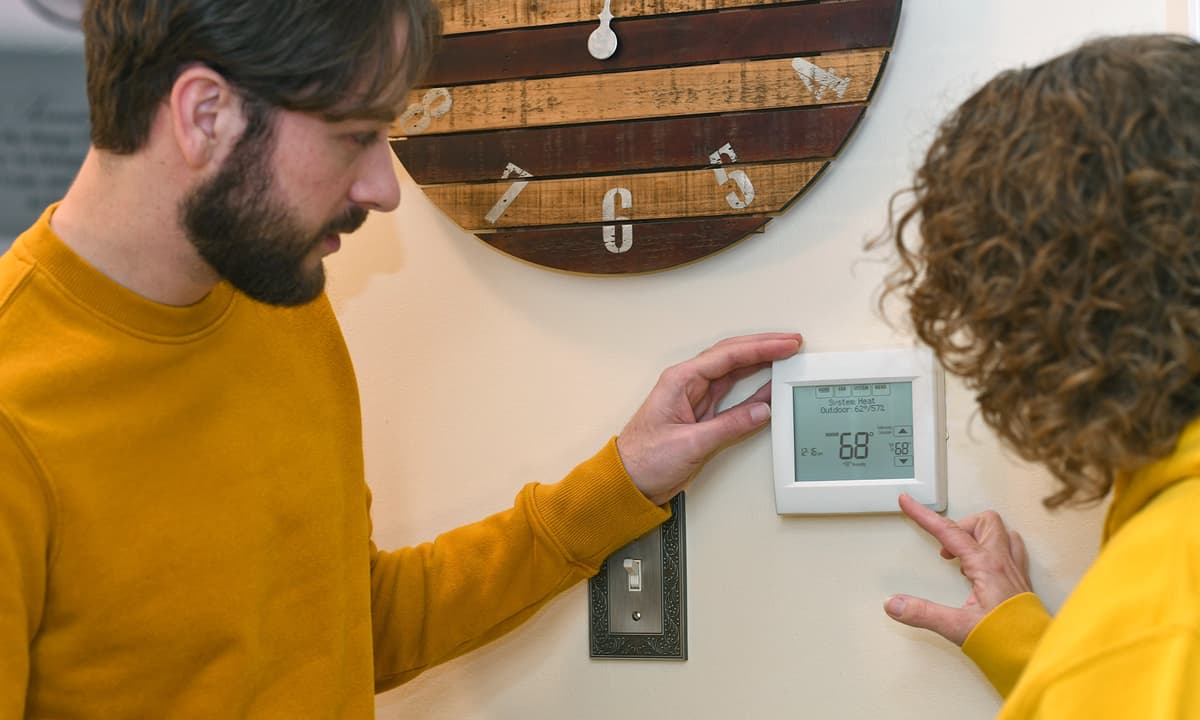
If your thermostat is not reaching its set temperature, start by verifying system settings, checking power supply and batteries, and assessing sensor placement. Clear any airflow obstructions such as dirty filters or blocked vents, and attempt simple DIY fixes like resetting or recalibrating the device. For complex issues like short cycling or electrical problems, contact a licensed HVAC technician.
On this page:
Quick Thermostat Settings To Check Before You Dive In
10 Common Reasons Your Thermostat Is Not Reaching the Set Temperature
When the HVAC System is the Real Culprit
Safe DIY Fixes You Can Try
When to Call a Licensed HVAC Technician
Hutchinson Helps Getting Your Home Comfortable Again
Frequently Asked Questions
When the weather is extreme, whether during a humid summer in Cherry Hill or a freezing winter in Philadelphia, a thermostat not reaching the set temperature can make your home feel anything but comfortable. You tap the screen, nudge the setpoint, and watch the display, but the air does not feel right. The good news is that most causes are straightforward, and many can be fixed with a few smart checks. Below are quick steps to try, the 10 reasons why your thermostat is not reaching its set temperature, safe DIY fixes, and the signs it is time to bring in a pro. By the end, you will know how to narrow down the culprit and restore comfort without guesswork.
Quick Thermostat Settings To Check Before You Dive In
Start with the easy stuff. A few minutes here can save hours of frustration later, especially if you are wondering how to fix a thermostat that is not getting to temperature.
Confirm the mode and setpoint: Make sure you are in Heat when it is cold and Cool when it is hot, not Off. Set the temperature a few degrees beyond current room conditions to prompt a cycle. If you use schedules, ensure a temporary hold or an away mode is not overriding your preference.
Check power and batteries: If the display is blank or dim, replace batteries in battery powered models. Verify the furnace or air handler switch is on and the HVAC breaker has not tripped.
Fan setting matters: For daily use, set the fan to Auto, not On. A constantly running fan can circulate room temperature air and feel like the thermostat is not changing temperature. If your AC runs all the time but the house will not cool down, switch to Auto and retest.
Look around the thermostat: Direct sunlight, lamps, ovens, or drafts can throw off readings. An interior wall away from heat sources usually gives the most accurate temperature.
10 Common Reasons Your Thermostat Is Not Reaching the Set Temperature
If the basics look good but the room temperature is still off, one of these issues may be at play. Use this list when asking why is my thermostat not heating or cooling enough or why is my thermostat not reaching the set temp.
1. Incorrect settings or scheduling
A mis-set schedule, an active vacation mode, or the wrong system mode can leave the room temperature lower than the thermostat setting in winter or warmer than expected in summer.
2. User errors
Overriding schedules without saving, setting conflicting time blocks, or leaving the fan set to On instead of Auto can make the thermostat not change temperature as expected.
3. Weak or dead batteries
Low power can cause intermittent signals and delayed responses between the thermostat and the HVAC system.
4. Loose wiring or lost power
A loose C wire, corroded terminals, or a tripped breaker can cut communication and stop heating or cooling calls from reaching the equipment.
5. Faulty internal sensor
If the temperature sensor drifts, the thermostat may think the room is warmer or cooler than it is, so it stops early or runs too long.
6. Calibration drift
If the reading is off by more than 1 to 2°F compared to a trusted thermometer, the thermostat may need a calibration or offset adjustment.
7. Age and component wear
Over time, relays, screens, or internal controls can fail and cause erratic performance.
8. Poor location
Thermostats placed in hallways with little airflow, near exterior doors, or in direct sunlight can misread the home average temperature and miss setpoints.
9. Dirt and stuck parts
Dust on sensors or stuck contacts in older mechanical models can block or delay calls for heating or cooling.
10. Software or compatibility issues
After outages, some smart thermostats can lose settings. Systems without a C wire may suffer from power instability that leads to dropouts or resets.
When the HVAC System is the Real Culprit
Sometimes the thermostat is doing its job, but the system cannot keep up. If the room temperature lower than the thermostat setting persists in the heating season, or your home lags behind on hot days, these system level issues could be to blame. These apply whether you are troubleshooting the thermostat not reaching a set temperature or asking why is my air conditioner not cooling my house.
Restricted airflow: A clogged air filter, closed or blocked registers, or a failing blower motor limits airflow and makes it hard to reach your setpoint.
Equipment faults: Furnaces with ignition problems may short cycle or fail to fire. Air conditioners or heat pumps with low refrigerant, dirty coils, or compressor issues will struggle to cool or heat.
Ductwork and control problems: Disconnected, leaky, or uninsulated ducts can dump conditioned air into attics or crawlspaces. Zoning malfunctions like stuck dampers keep air from reaching certain areas.
Safe DIY Fixes You Can Try
Many issues can be handled with basic steps and no special tools. Always switch off power at the breaker before removing thermostat covers or opening HVAC panels. These steps help with what to check when your heat will not get warm enough and what to try when my AC runs all the time but the house will not cool down.
Replace batteries and reset: Fresh batteries can restore stable power. Perform a soft reset per the manufacturer guide, then recheck the date, time, and schedules.
Tighten low voltage wiring: With power off, remove the faceplate and confirm each wire is secured under its terminal. Look for corrosion or frayed conductors.
Check calibration: Place a reliable thermometer near the thermostat for 15 minutes. If readings differ by more than 1 to 2°F, adjust the offset or run a calibration if supported.
Clean the device and surroundings: Gently dust the sensor opening and keep heat sources or direct sunlight away. If location is a constant issue, consider relocating the thermostat to an interior wall.
Replace air filters: Check monthly and replace air filters every 60 to 90 days, or more often with pets or allergies. A clean filter improves airflow and comfort quickly.
Open registers and clear vents: Make sure supply registers and return grilles are open and not blocked by furniture, rugs, or curtains.
Power cycle the system: Turn the thermostat to Off, switch the HVAC breaker off for 60 seconds, then restore power to clear certain control glitches.
When to Call a Licensed HVAC Technician
Some problems point to deeper issues that require professional tools and training. If you are stuck asking why is my house not heating up to the thermostat setting or why is my thermostat not heating or cooling enough, it is time to schedule service with our local HVAC experts serving homeowners across South Jersey, eastern Pennsylvania, and northern Delaware.
Call right away if you notice: No heating or cooling, rapid short cycling, repeated breaker trips, burning or electrical smells, unusual banging or hissing, or any gas or combustion concerns.
Work best left to pros: Refrigerant leaks and charging, compressor or heat exchanger faults, advanced electrical diagnostics, inducer or ignition repairs, duct leakage testing, and zoning controller issues.
What a service visit includes: A technician will verify thermostat settings and low voltage signals, check filters and airflow, test electrical components, measure refrigerant pressures or combustion performance, and inspect ductwork. You will receive a diagnosis, safety assessment, repair options with estimates, and guidance on maintenance or replacement when equipment is nearing end of life.
Call our team of licensed HVAC technicians
Hutchinson Helps Getting Your Home Comfortable Again
Comfort glitches don’t have to linger. With a handful of quick checks, a review of common reasons your thermostat isn’t meeting the set temperature, and a few safe DIY steps, many issues can be resolved at home. If symptoms point to larger HVAC concerns, scheduling a pro promptly can protect your system and your peace of mind. Whether it’s a chilly day in Wilmington and the thermostat won’t reach the set point or a scorching afternoon in Cherry Hill with no temperature change, our technicians are ready to help serve homeowners throughout New Jersey, Pennsylvania, or Delaware.
Frequently Asked Questions
How to fix a thermostat that is not getting to temperature?
Start with mode and setpoint, set fan to Auto, replace the air filter, install fresh batteries, and verify breakers are on. Compare the thermostat reading to a separate thermometer and recalibrate or apply an offset if it is off by more than 1 to 2°F.
Why is my thermostat not heating or cooling enough?
Common causes include dirty filters, blocked vents, low batteries, poor thermostat placement, or equipment problems like low refrigerant or ignition faults. Check airflow first, then power, then sensor accuracy.
HVAC system not maintaining temperature, what should I try?
Verify schedules are not overriding your setpoint, ensure doors and windows are closed, open all supply registers, and inspect ducts for obvious leaks. If the system runs continuously without progress, schedule a load check to confirm sizing.
My AC runs all the time but my house will not cool down, why?
This often points to restricted airflow, dirty outdoor or indoor coils, low refrigerant, or undersized equipment. Clean or replace the filter, rinse debris from the outdoor coil with power off, set fan to Auto, and call a pro to test refrigerant and system capacity if cooling does not improve.
Why is my air conditioner not cooling my house?
Possible issues include clogged filters, iced evaporator coils, thermostat miscalibration, or duct leaks. Confirm airflow, let iced coils thaw, and check for accurate thermostat readings before calling a technician.
What to check when your heat will not get warm enough?
Confirm the system is set to Heat, increase the setpoint by 3 to 5°F, verify the furnace switch and breaker are on, replace the filter, and inspect return grilles for blockages. If the furnace short cycles or fails to ignite, contact a pro.
How long should it take to reach the set temperature?
In moderate weather, most systems change room temperature by about 1 to 2°F per hour. During very hot or cold days, progress can be slower, especially in drafty homes or with undersized equipment.
Related Articles
What do you need help with today?
Heating
No heat, strange smells, rising bills? We repair and replace heating systems to keep your home reliably warm.
Air Conditioning
AC blowing warm air? Uneven cooling in your rooms? We fix cooling issues fast and keep your system running smoothly all summer.
Plumbing
Our highly trained plumbers handle it all, from leaky faucets to full system installations and repipes.
Electrical
The smartest team in town. You need repair, installations, wiring, inspections, lighting — you name it.