
A thermostat may stop working due to dead batteries, tripped circuit breakers, loose or damaged wiring, incorrect temperature or mode settings, poor placement near heat sources or drafts, or component failure within the HVAC system. Start troubleshooting by replacing batteries, checking power switches and breakers, confirming settings, and verifying wall mounting before contacting a technician.
On this page:
Why Won't My Thermostat Turn On?
1. Power Problems Are Keeping the Thermostat Off
2. Wiring Problems Can Prevent the Thermostat From Communicating With Your HVAC System
3. Incorrect Thermostat Settings Can Prevent Heating or Cooling
4. Poor Thermostat Placement Can Cause Inaccurate Readings
5. The Thermostat or HVAC System May Have Failed
Hutchinson HVAC Service in New Jersey, Pennsylvania, and Delaware
Frequently Asked Questions
When your thermostat stops working, simple fixes like replacing dead batteries or resetting the HVAC circuit breaker often solve the problem. If the screen stays blank or your heating and cooling system fails to respond after taking these initial steps, professional HVAC diagnostics can pinpoint the underlying issue.
For homeowners throughout New Jersey, Pennsylvania, and Delaware, a malfunctioning thermostat can quickly affect comfort. Hutchinson provides HVAC service across South Jersey, Greater Philadelphia, and northern Delaware, helping homeowners diagnose thermostat and heating and cooling problems.
Why Won't My Thermostat Turn On?
If your thermostat won't turn on, try these basic checks:
Replace the batteries if your thermostat uses them.
Check the HVAC circuit breaker.
Confirm the furnace or air-handler switch is on.
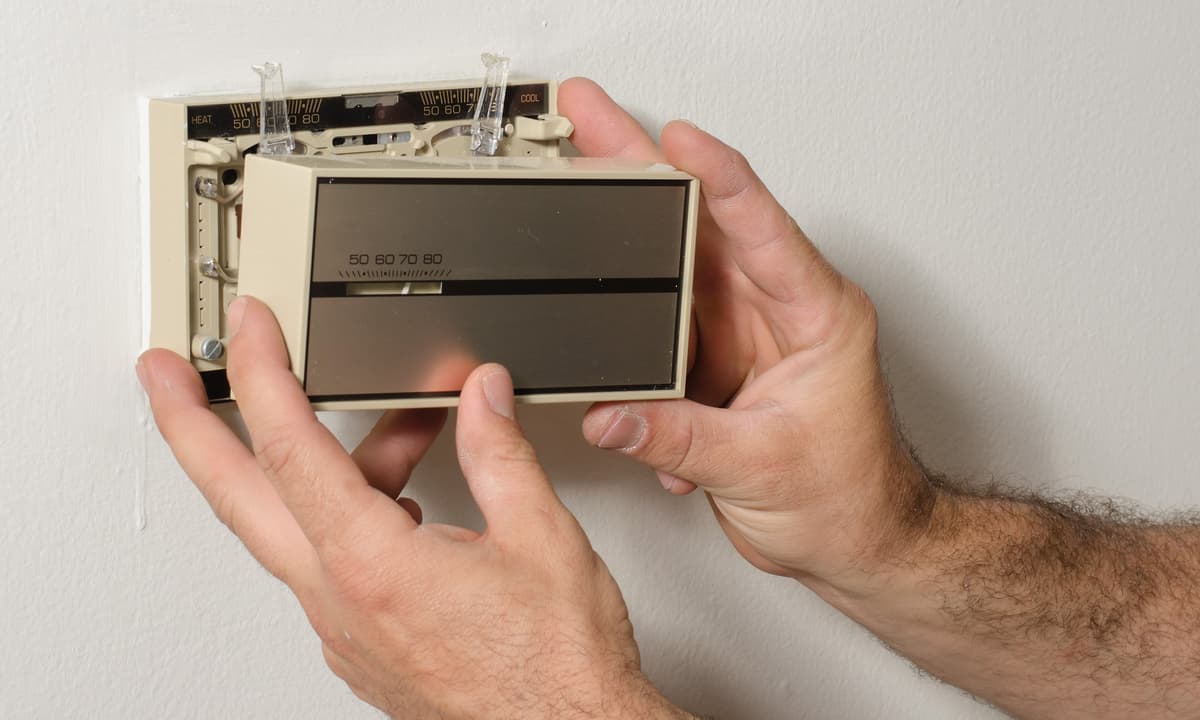
Make sure the thermostat is firmly attached to its wallplate.
Look for obvious signs of damaged wiring.
Check the thermostat settings if the display is working.
If the display remains blank or a breaker trips again after being reset, stop troubleshooting and contact an HVAC professional.
1. Power Problems Are Keeping the Thermostat Off
A thermostat needs a reliable power supply to operate. Dead batteries, a tripped HVAC breaker, a shut-off furnace switch, or a problem with the thermostat's low-voltage power supply can cause a blank display, unresponsive controls, or repeated restarts.
Dead Thermostat Batteries
Many thermostats use batteries as their primary or backup power source. When the batteries are depleted, the display may go blank and the thermostat may stop communicating with your HVAC system.
If your thermostat has removable batteries, replace them with the correct type and size according to the manufacturer's instructions. Reattach the thermostat and check if the display returns.
Tripped Breaker or Furnace Switch
If replacing the batteries does not help, check your electrical panel for a breaker labeled HVAC, furnace, or air handler. If it is in the middle position, you can switch it fully off and back on once.
Also check the service switch near your furnace or air handler and make sure it is on. If the breaker trips again, do not continue resetting it. Repeated trips can indicate an electrical or equipment problem that requires professional diagnosis.
C-Wire or Transformer Problems
Many smart thermostats rely on a C-wire for continuous power. A problem with the C-wire or a failed transformer can prevent the thermostat from receiving the power it needs, causing it to reboot, drain batteries quickly, or remain blank.
Avoid testing electrical connections yourself. An HVAC professional can safely test the low-voltage circuit and determine if the thermostat is receiving adequate power.
If you need help diagnosing the problem, Hutchinson provides HVAC accessory services throughout its New Jersey, Pennsylvania, and Delaware service areas, including communities like Cherry Hill, Camden, Burlington, Philadelphia, and Wilmington, as well as expert thermostat repair and replacement.
2. Wiring Problems Can Prevent the Thermostat From Communicating With Your HVAC System
Even when a thermostat has power, wiring problems can prevent it from communicating properly with the furnace, air conditioner, or heat pump. Loose, damaged, or incorrectly connected wires can cause intermittent operation, short cycling, inconsistent temperatures, or a system that does not respond to the thermostat.
Loose or Damaged Thermostat Wires
Low-voltage thermostat wires can become loose or damaged over time. Renovations, thermostat replacements, work around the wall, aging insulation, and rodents can all damage thermostat wiring.
If you can safely inspect the thermostat, look for obvious signs of loose connections, exposed copper, corrosion, or damaged insulation. Do not guess which terminal a wire belongs to or change the wiring configuration without following the manufacturer's instructions.
If wiring appears damaged, a professional can determine whether the cable needs to be repaired or replaced.
Incorrectly Connected Wiring
A thermostat may also stop communicating with the HVAC system if wires are connected to the wrong terminals or were not connected correctly during installation or replacement. This can prevent the system from responding properly to heating or cooling commands.
Because thermostat wiring varies by system and equipment type, avoid changing terminal connections unless you are following the manufacturer's specific instructions. An HVAC professional can test the connections and verify that the thermostat is communicating correctly with the system.
3. Incorrect Thermostat Settings Can Prevent Heating or Cooling
Not every thermostat problem is a hardware failure. Incorrect settings, schedules, or smart thermostat configurations can prevent your HVAC system from operating as expected.
Check the Mode, Temperature, and Fan
Make sure the thermostat is set to Heat when you need heating and Cool when you need air conditioning.
Check the temperature setpoint, too. If the cooling setpoint is higher than the current room temperature, the AC may not start. If the heating setpoint is lower than the room temperature, the furnace may not run.
Also check the fan setting. On keeps the blower running continuously, while Auto runs it when the system calls for heating or cooling.
Check Smart Thermostat Settings
Smart thermostats can use schedules, vacation modes, geofencing, eco settings, and learning features to automatically adjust temperatures.
These settings can sometimes override a manual change. Temporarily disable automatic settings and see if the thermostat responds correctly.
If the thermostat works at the wall but the mobile app shows it as offline, check your Wi-Fi connection and confirm your network credentials have not changed.
Restart Before Factory Resetting
A restart or soft reset may resolve minor software issues. Before performing a factory reset, save your schedules, Wi-Fi information, and HVAC configuration.
Incorrect system settings can create problems with heat pumps, multi-stage equipment, and reversing valves. If you are unsure how your thermostat should be configured, Hutchinson can verify the setup and make sure it is compatible with your HVAC system.
4. Poor Thermostat Placement Can Cause Inaccurate Readings
A thermostat needs to accurately measure the temperature around it. Poor placement can lead to inaccurate readings, unnecessary cycling, and uneven comfort.
Avoid Sunlight, Drafts, and Heat Sources
Do not place a thermostat where it receives direct sunlight or sits near:
Exterior doors or windows
HVAC vents
Fireplaces
Lamps or televisions
Appliances
Drafty areas
An interior wall in a central area of the home is generally the best location.
Check for Airflow Behind the Thermostat
Air moving through the wall cavity can affect the thermostat's temperature reading. Gaps around the wiring opening can allow drafts to reach the sensor.
A secure wallplate and properly sealed opening can help prevent this issue. If the thermostat is loose or pulling away from the wall, it may need to be remounted.
Consider Multi-Level Home Comfort
Temperature differences are common in homes with multiple floors. Upstairs rooms may be warmer while lower levels remain cooler, making a single thermostat less representative of the entire home.
Remote sensors or zoning may help in some homes. Hutchinson offers heating and cooling services to help homeowners evaluate broader comfort issues.
5. The Thermostat or HVAC System May Have Failed
Sometimes the thermostat itself is failing. In other cases, the thermostat works correctly but another HVAC component is preventing the system from operating.
Signs Your Thermostat May Be Failing
A thermostat may need repair or replacement if you notice:
A blank, dim, or flickering display
Unresponsive controls
Frequent reboots
Inaccurate temperature readings
Settings that do not stay saved
Delayed responses
Repeated smart thermostat connectivity problems
Our HVAC professionals can determine if the thermostat not working should be repaired, replaced, or reconfigured.
Signs Your HVAC System Is the Problem
Your thermostat may be working correctly if the display responds normally but the HVAC system does not.
Potential signs of an equipment problem include:
The thermostat indicates heating or cooling is running, but there is no airflow.
The system starts and stops quickly.
The equipment makes unusual sounds.
A breaker repeatedly trips.
An error code appears.
The home does not reach the selected temperature.
The issue could involve a safety control, condensate problem, blower motor, electrical component, or control board.
Hutchinson provides AC and heating repair services to diagnose problems affecting both the thermostat and HVAC equipment.
Hutchinson HVAC Service in New Jersey, Pennsylvania, and Delaware
A thermostat that stops working does not always need to be replaced. Start by checking the batteries, power, settings, wiring, and thermostat placement. If those checks do not solve the problem, the issue may involve the thermostat itself or another HVAC component.
Since 1948, Hutchinson has provided trusted air conditioning, heating, plumbing, and electrical services throughout New Jersey, Pennsylvania, and Delaware, including communities like Cherry Hill, Camden, Burlington, Philadelphia, and Wilmington. When you need expert assistance, Hutchinson offers:
Licensed and highly trained HVAC professionals
Same-day service and next-day installation
Upfront pricing
Thermostat repair and replacement
AC and heating repair
If your thermostat is not working, schedule HVAC service with Hutchinson for professional diagnosis and repair.
Frequently Asked Questions
Why is my thermostat screen blank?
Dead batteries, a tripped HVAC breaker, wiring problems, or a failed low-voltage component can cause a blank thermostat screen. Replace the batteries if applicable and check the HVAC breaker. If the display remains blank, professional diagnosis may be needed.
Why won't my thermostat turn on after changing the batteries?
If new batteries do not restore the display, the thermostat may not be receiving power, the thermostat itself may have failed, or there may be an issue with the HVAC system's low-voltage circuit. Check the HVAC breaker and contact a professional if the thermostat remains unresponsive.
Can I run my HVAC system without a C-wire?
Some thermostats can operate without a C-wire, while many smart thermostats require one for consistent power. Compatibility depends on the thermostat and HVAC system. A professional can determine if your system needs a C-wire or another wiring solution.
When should I replace my thermostat?
Consider replacing your thermostat if it repeatedly reboots, does not maintain settings, provides inaccurate readings, becomes unreliable, or is incompatible with your HVAC system. A professional can determine if replacement is necessary.
Related Articles
What do you need help with today?
Heating
No heat, strange smells, rising bills? We repair and replace heating systems to keep your home reliably warm.
Air Conditioning
AC blowing warm air? Uneven cooling in your rooms? We fix cooling issues fast and keep your system running smoothly all summer.
Plumbing
Our highly trained plumbers handle it all, from leaky faucets to full system installations and repipes.
Electrical
The smartest team in town. You need repair, installations, wiring, inspections, lighting — you name it.