
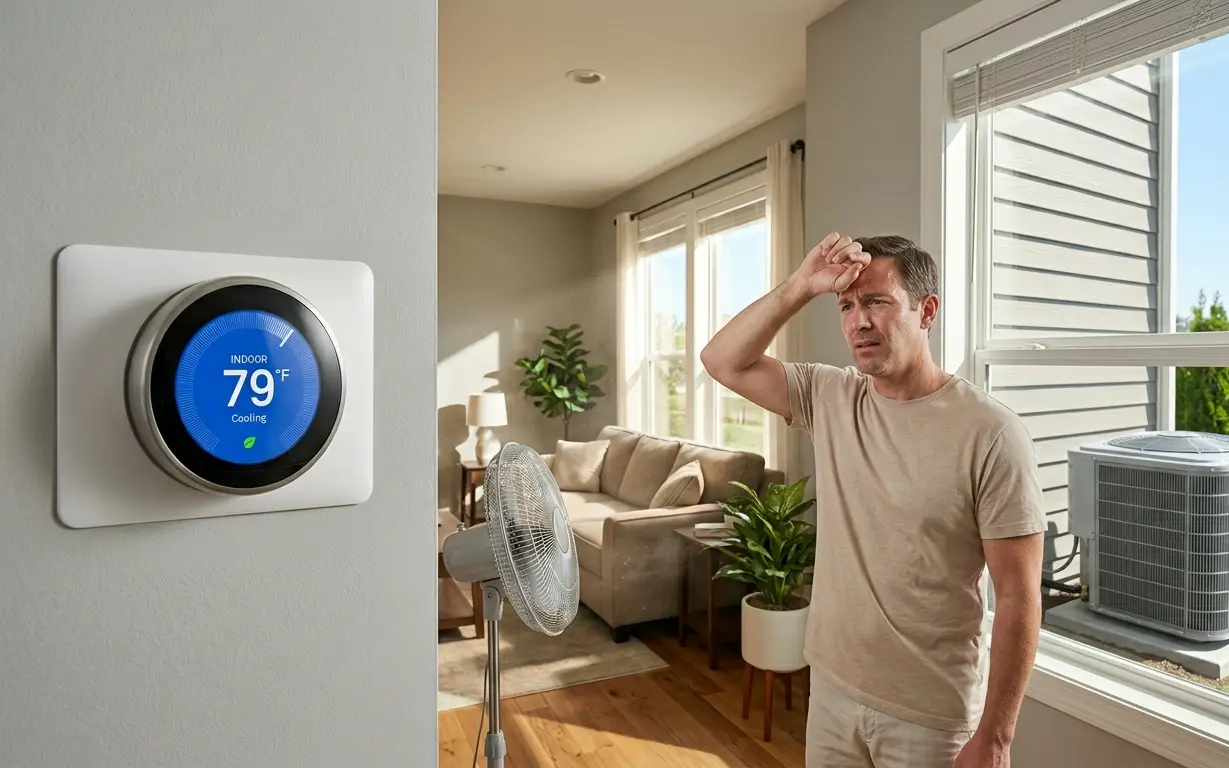
An air conditioner blowing warm air is often caused by simple issues like incorrect thermostat settings, a dirty air filter restricting airflow, or debris blocking the outdoor condenser coil. More complex problems include low refrigerant levels from leaks or electrical component failures. Homeowners can perform quick checks, such as replacing filters and inspecting breakers, before scheduling professional HVAC repair.
On this page:
How Central AC Cools Your Home
10 Common Reasons Your AC Is Blowing Warm Air
What to Do When Your AC Is Not Cooling
Mid-Atlantic Heat: AC Challenges in NJ, PA, & DE
When to Call an HVAC Professional
Need Reliable Cooling Help? Learn Why Hutchinson is the Trusted Choice
Frequently Asked Questions
Few things are more frustrating than an air conditioner blowing warm air on a hot day. The good news: many causes are simple to check, and some fixes are quick. This guide explains how AC cooling works, the top 10 reasons why your AC is blowing warm air, safe steps you can try at home, and when to call a professional. If you’re wondering what to do when your AC isn't cooling and asking yourself, ‘why is my AC unit not working properly’ or ‘why is my AC blowing hot air’, you’ll find clear answers here.
How Central AC Cools Your Home
Your central air conditioner moves heat out of your home using a refrigeration cycle. The compressor pumps refrigerant to the outdoor condenser coil where heat is released. After passing through an expansion device, the refrigerant becomes cold and flows through the indoor evaporator coil, absorbing heat from indoor air. The blower then circulates that cooled air through your ducts.
Airflow matters. A dirty air filter, blocked returns or supplies, or a weak blower motor reduces airflow across the evaporator coil, limiting heat removal and making vents feel tepid. Thermostat settings matter too. Set the thermostat to Cool with the fan on Auto, not On. Fan On can move unconditioned air between cycles, which may make it feel like your air conditioner is blowing warm air.
10 Common Reasons Your AC Is Blowing Warm Air
Here are 10 reasons why your AC is blowing warm air and the signs to watch for. If your AC unit blows warm air after these checks, schedule professional air conditioning repair services.
1. Low Refrigerant From Leaks or Undercharge
Refrigerant isn’t consumed. If it’s low, there’s likely a leak. Symptoms include weaker cooling, hissing or bubbling at lines, icing on the coil, and an AC unit blowing warm air. Our certified HVAC technician can accurately diagnose the leak, perform the evacuation, and restore the AC unit to manufacturer specifications.
2. Dirty or Clogged Air Filter
A congested air filter cuts airflow across the evaporator coil, reducing heat absorption and causing ice. Replace 1-inch filters every 1 to 3 months and thicker media filters every 3 to 6 months or sooner if dirty. (This is one of the fastest fixes when the air conditioning is blowing hot air.)
3. Dirty or Blocked Condenser Coil
Leaves, lint, and dirt on the outdoor coil trap heat and reduce capacity. If the unit can’t dump heat outdoors, the air inside stays warm. Keep at least 2 feet of clearance and rinse the coil gently.
4. Thermostat Issues or Incorrect Settings
If set to Heat, Fan On, or a set point above room temperature, you’ll feel warm air. A miscalibrated or failing thermostat can also short-cycle or misread temperature.
5. Tripped Breaker or Blown Fuse Outdoors
If the indoor blower runs but the outdoor unit is off, the AC system circulates air without cooling. Check the circuit breaker, outdoor disconnect, and fuses. Reset a tripped breaker once. If it trips again, call a pro.
6. Frozen Evaporator Coil
Ice forms from low airflow, low refrigerant, or very low outdoor temperatures on a heat pump. Ice blocks heat exchange and leaves you with little or no cooling and sometimes an ac unit blows hot air after thawing if the root cause remains.
7. Faulty Compressor
A compressor that won’t start or can’t move refrigerant won’t cool. Clues include humming, clicking, frequent breaker trips, or the outdoor fan spinning with no cooling.
8. Failed Capacitors or Contactor
These parts start and run the compressor and outdoor fan. If they fail, the condenser may not engage, resulting in an air conditioner blowing warm air indoors.
9. Ductwork Problems
Leaking, crushed, or disconnected ducts can pull hot attic or crawl space air into the supply, diluting cool air and making rooms feel warm. You may notice dust, uneven temperatures, or whistling sounds.
10. Mechanical Airflow Restrictions
Closed or obstructed vents, a weak indoor blower motor, or a dirty evaporator coil reduce airflow and cooling capacity, leading to an air conditioner blowing warm air even when equipment runs.
Explore Hutchinson’s AC Services
What to Do When Your AC Is Not Cooling
If your AC unit is running but not cooling the house, start with these quick homeowner checks. Always prioritize safety by turning off the system before inspecting any components. Here are safe steps to help you identify why your air conditioner is blowing warm air and when to call a professional.
Confirm Thermostat Settings
Set to Cool, Fan Auto, and at least 3 to 5 degrees below room temperature. Replace batteries if applicable, and verify the display is responsive.
Check Power and Breakers
Inspect the electrical panel for tripped breakers labeled AC or condenser. Verify the outdoor disconnect is on. Reset a breaker once only. If it trips again, stop and call a professional.
Inspect and Replace the Air Filter
Turn off the system. Remove the return filter at the air handler or return grille. If it looks gray, dusty, or matted, replace it with the correct size and arrow orientation. Restore power and allow 10 to 15 minutes for cooling to stabilize.
Clear the Outdoor Unit
Turn off power to the condenser. Remove debris and vegetation at least 2 feet around the unit. Rinse the coil gently from the outside with a garden hose. Avoid high pressure and keep water out of the electrical compartment.
Look for Ice
Check refrigerant lines and the air handler for frost. If present, turn the system off and set the fan to On for 2 to 3 hours to thaw. Return the fan to Auto after thawing. If icing returns, you likely have a refrigerant or airflow issue.
Open Air Vents and Check Returns
Open all air supply registers and return grilles. Make sure furniture or doors are not blocking airflow.
Observe the Outdoor HVAC Unit
When cooling is called, both the condenser fan and compressor should run. If only the fan runs or neither runs, capacitors, the contactor, or the compressor may be at fault and require service.
If cool air returns, keep monitoring. If the ac unit blowing warm air continues, avoid extended operation. Running for hours while the air conditioner is blowing warm air can stress components and raise energy costs.
Mid-Atlantic Heat: AC Challenges in NJ, PA, & DE
Homes across southern New Jersey, the Philadelphia area, and northern Delaware face unique weather challenges during the peak summer months. High regional humidity coupled with intense summer heat forces air conditioning units to work overtime, straining compressors and causing evaporator coils to freeze up more frequently. Salt air in coastal areas like Ocean City can also accelerate outdoor coil corrosion. Understanding these local climate impacts helps ensure your system is properly maintained to handle mid-Atlantic summers.
When to Call an HVAC Professional
Schedule an emergency air conditioning repair service if any of these occur:
Ice returns after thawing or you hear bubbling and hissing near refrigerant lines.
Oil stains appear at refrigerant connections or rooms never reach set temperature despite correct settings.
Breakers trip repeatedly, you notice burning smells, or you hear clicking or buzzing at the outdoor unit without startup.
Rattling, grinding, or metallic noises from the compressor or blower motor.
With local dispatching centers and service teams stationed throughout Cherry Hill, Philadelphia, Wilmington, and nearby neighborhoods, fast help is always close by. During a professional diagnostic, expect checks of airflow and static pressure, filter and coil condition, capacitors and contactor, voltage and amperage, compressor health, and refrigerant pressures and temperatures. If a leak is found, your technician will explain repair options, recover and evacuate the system, and restore the AC unit to manufacturer specifications. This is the most reliable way to resolve persistent air conditioning blowing hot air issues.
Call Professional HVAC Technician
Need Reliable Cooling Help? Learn Why Hutchinson is the Trusted Choice
If your air conditioner is blowing warm air and simple checks haven’t solved it, the team at Hutchinson is ready to help homeowners across southern New Jersey (including Cherry Hill, Ocean City, and Trenton), the Philadelphia suburbs (including King of Prussia and West Chester), and northern Delaware (including Wilmington and New Castle). Our certified HVAC technicians deliver thorough diagnostics, expert repairs, and seasonal maintenance to keep your home comfortable. Call today or schedule online for prompt service and clear, upfront recommendations.
Frequently Asked Questions
Could a dirty filter make my AC blow hot air?
Yes. A dirty filter restricts airflow across the evaporator coil, reducing heat absorption and sometimes causing ice. Both conditions can leave the air conditioner blowing warm air from your vents. Replacing a clogged filter is one of the quickest fixes when you notice your ac unit blowing warm air
What are signs of a dirty AC filter?
Filter media looks gray or matted with dust.
Dust buildup around return grilles.
Reduced airflow at vents and longer cooling cycles.
Musty odors when the system starts.
Visible ice on refrigerant lines or the air handler.
How do I check my AC unit for problems myself?
Verify thermostat settings, inspect and replace the filter, clear the outdoor coil area, look for ice, and listen for unusual sounds at the outdoor unit. These are safe steps for most homeowners. Electrical testing, refrigerant measurements, and component replacements should be handled by a licensed technician.
Why is my AC running but not cooling the house?
Common reasons include a dirty filter, blocked condenser coil, low refrigerant due to a leak, duct leaks pulling in hot attic air, or a failing capacitor or compressor. If the indoor fan runs but the outdoor unit is off, you’ll feel air conditioning blowing hot air until the outdoor system runs.
How long can I run the AC if it is blowing warm air?
Limit operation to brief tests while troubleshooting. Running for hours while the air conditioner blowing warm air continues can overheat the compressor, waste energy, and worsen icing. If the outdoor unit is not running or you see frost, turn the system off and schedule service.
What are quick AC fixes versus long-term solutions?
Quick fixes include correcting thermostat settings, replacing a dirty filter, clearing debris from the outdoor unit, and thawing a frozen coil. Long-term solutions address root causes: repairing duct leaks, sealing and insulating exposed ducts, fixing refrigerant leaks and charging to spec, replacing failing electrical components, and enrolling in routine maintenance. These steps help prevent a repeat of your AC blowing warm air.
Related Articles
What do you need help with today?
Heating
No heat, strange smells, rising bills? We repair and replace heating systems to keep your home reliably warm.
Air Conditioning
AC blowing warm air? Uneven cooling in your rooms? We fix cooling issues fast and keep your system running smoothly all summer.
Plumbing
Our highly trained plumbers handle it all, from leaky faucets to full system installations and repipes.
Electrical
The smartest team in town. You need repair, installations, wiring, inspections, lighting — you name it.