
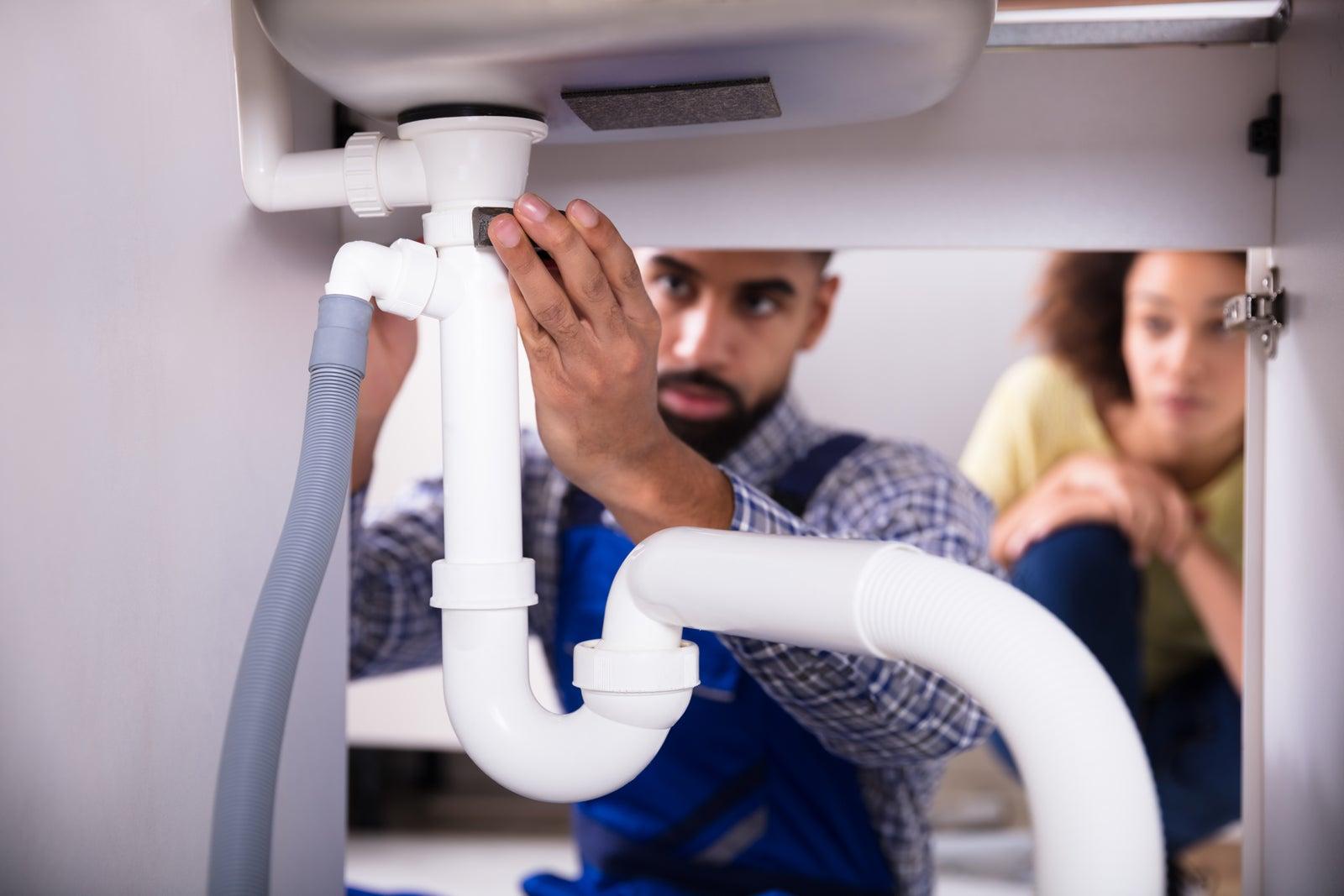
Quick answer: To repair a leaky pipe, shut off the water, drain the line, and dry the area. For a small pinhole or joint leak, a pipe repair clamp, epoxy putty, or self-fusing silicone tape can stop the drip temporarily. A lasting fix means replacing the damaged section with a rated coupling or fitting. Call a licensed plumber for hidden or recurring leaks.
On this page:
Which fix do you need?
What to do first
Finding the leak
Your pipe material
Temporary fixes
Step-by-step repair
Testing your repair
Repair or replace
What it costs
Preventing leaks
FAQs
Most pipe leaks have a clear cause and fix, and where the water is coming from tells you whether it’s a DIY job or one for a plumber. Need help now? Hutchinson provides 24/7 pipe leak repair across New Jersey, Pennsylvania, and Delaware. Call 856-208-5993.
Don’t DIY this leak if: you smell gas, see water near outlets, wiring, or an electrical panel, have a sewage backup, can’t find or close your shutoff valve, or the leak is inside a wall, ceiling, or slab, or at a water heater. Shut off the main water supply if you can reach it safely, then call an emergency plumber.
If you smell gas, leave the home first and call your gas utility or 911 from outside.
Which Fix Do You Need? A Quick Leaky Pipe Decision Guide
If you see… | Do this first | Go to |
Water spraying or flooding | Shut off the nearest valve or main | What to do first |
A leak at a joint or connection | Check for a loose fitting or worn washer | Temporary fixes |
A leak on a straight pipe | Match the repair to your pipe material | Your pipe material |
A copper pinhole or a leak inside a wall | Plan on a professional repair | Repair or replace |
What to Do First When a Pipe Is Leaking
To stop a leaking pipe, shut off the water closest to the leak, then drain the line so there’s no pressure behind it.
Cut the power to any outlets or appliances the water can reach.
Shut off the water at the fixture valve, or at your home’s main valve if there isn’t one.
Drain the line by opening the lowest faucet in the house.
Contain the water with a bucket and towels, and move belongings away.
Take photos of the leak and damage for insurance.
It’s an emergency if water is spraying, coming through a ceiling, near electrical or a water heater, or won’t stop.
Hutchinson repairs a frozen or burst pipe 24/7, including holidays, with no emergency fee. Call 856-208-5993.
How to Find the Source of a Pipe Leak
The average household’s leaks can waste more than 9,300 gallons of water a year, according to the U.S. EPA.
Visible leak signs | Hidden leak signs |
|---|---|
Wet pipes or fittings, Puddles under sinks, Green or white crust on copper, Rust on galvanized pipe | Stains or bubbling paint, Warped flooring or a musty odor, Warm floor spots (a possible hot-water slab leak), An unusually high water bill |
How to Use Your Water Meter to Check for a Hidden Leak
The EPA’s WaterSense program recommends this test:
Turn off all faucets and water-using appliances.
Record the meter reading or take a photo.
Use no water for two hours.
Read the meter again. If it changes, you probably have a leak.
This confirms water loss, not its location. Rule out a running toilet first: add food coloring to the tank and check the bowl after 10 minutes.
Meter still moving? Hutchinson can trace signs of a hidden plumbing leak behind walls and under slabs. Call 856-208-5993.
Identify Your Pipe Material Before You Repair It
Use only products rated for your pipe material. The wrong one can make the leak worse.
Pipe material | How to identify it | Temporary repair | Permanent repair | Call a plumber when |
Copper | Reddish-brown or green; soldered joints | Clamp, metal-rated epoxy, or silicone tape | Push-to-connect or slip coupling | A solder joint leaks or pinholes recur |
PEX | Flexible red, blue, or white tubing with crimp rings | Silicone tape or clamp | New fitting or PEX-rated coupling | You lack the right crimp tool |
PVC / CPVC | Rigid white (PVC) or cream (CPVC) plastic | Plastic-rated epoxy or clamp | Solvent-weld a new coupling | Fittings are brittle or cracked. Let cement cure before restoring water. |
Galvanized steel | Dull gray, threaded; a magnet sticks | Clamp | Replace the section | Leaks recur or flow is weak, which can signal a bigger replacement |
Flexible plastic pipe stamped “PB2110,” usually gray, may be polybutylene, which was made from 1978 to mid-1995. It can break down when exposed to certain water disinfectants, according to InterNACHI. Have a plumber evaluate it.
How to Temporarily Stop a Leaking Pipe
You can often stop a small leak without replacing the pipe, but most quick fixes are temporary. Drain and dry the pipe first, and follow the product’s cure time.
Repair method | Best for | Temporary or permanent | Main limitation |
Tighten fitting or replace washer | A loose or worn connection | Can be permanent | Overtightening cracks plastic |
Self-fusing silicone tape | A small, accessible leak | Temporary | Needs a clean, dry surface |
Epoxy putty | A tiny pinhole or crack | Temporary | Not for large cracks or corroded pipe |
Fiberglass repair wrap | A small mid-pipe leak | Temporary | Doesn’t fix underlying corrosion |
Pipe repair clamp | Straight, accessible pipe | Temporary unless rated for longer use | Not for severe damage |
Push-to-connect or slip coupling | A cut-out damaged section | May be permanent when correctly installed | Needs a square cut and compatible pipe |
How to Repair a Leaky Pipe, Step by Step
A permanent pipe leak repair means cutting out the damaged section and joining the ends with a rated coupling.
What you’ll need:
Adjustable wrench, bucket, and towels
Pipe cutter, plus sandpaper for copper
Push-to-connect fitting or slip coupling
Safety glasses and gloves
Steps:
Shut off the water and drain the line.
Confirm the pipe material and buy a matching coupling.
Make square cuts on both sides of the damage.
Deburr the ends and sand copper until bright.
Install the coupling per the manufacturer’s directions.
Restore water slowly and test the repair.
Avoid these mistakes:
Patching a wet, pressurized pipe and expecting it to last
Overtightening plastic or old threaded fittings
Treating a temporary patch as permanent
Cutting pipe when you’re unsure of the material or nearby wiring
Never use any of these products on a gas line
How to Fix a Pinhole Leak in a Copper Pipe
A pinhole forms when corrosion eats through the pipe wall. Seal it temporarily with a clamp or metal-rated epoxy, or replace the section for a lasting fix. A leaking solder joint needs a plumber.
Don’t ignore recurring pinholes. Causes can include installation issues, grounding, and your water’s reaction with copper. Have your pipes evaluated and consider water quality testing.
How to Test a Pipe Repair for Leaks
Let the repair fully cure.
Turn the water on slowly.
Hold a dry paper towel under the repair for several minutes.
Check nearby joints, then recheck in a few hours and the next day.
Watch for low water pressure, discolored water, or new moisture.
Dry the area within 24 to 48 hours to prevent mold growth, as the EPA recommends.
Repair or Replace? When to Call a Plumber
One leak on an exposed pipe is usually worth repairing. Recurring pipe leaks or widespread corrosion usually mean it’s time to replace the pipe.
Repair makes sense when… | Replace makes sense when… |
It’s one leak on an accessible pipe | Leaks keep coming back |
Pressure and water color are normal | You see corrosion, rust, or weak pressure |
The pipe is PEX or CPVC | The pipe is galvanized steel or polybutylene |
Call a plumber for leaks in walls or slabs, on your main water or sewer line, at a solder joint, or when you can’t find them. Some replacements also need a permit, which a plumber handles.
How to Prevent Future Pipe Leaks
Insulate pipes in crawl spaces, garages, and attics.
Drain outdoor hose bibs before the first freeze.
Watch for banging pipes, rusty water, or green crust.
A Comfort360 membership includes 15% off plumbing repairs and waived diagnostic fees with a repair.
Get 24/7 Pipe Leak Repair in New Jersey, Pennsylvania, and Delaware
Since 1948, Hutchinson’s licensed, insured plumbers have fixed leaking and burst pipes with upfront pricing, same-day service, and no emergency fee, backed by our on-time guarantee.
Based in Cherry Hill, we serve South Jersey, including Camden, Burlington, and Gloucester counties, plus Philadelphia, Wilmington, and communities across NJ, PA, and DE. See our service areas.
We serve homeowners in Cherry Hill Township, Camden, Moorestown, Mount Laurel Township, Sewell and Voorhees Township, New Jersey; Philadelphia, Pennsylvania; and Wilmington and Newark, Delaware.
Leaky Pipe FAQs
Can I fix a leaking pipe without replacing it?
Often, yes. A pipe repair clamp, epoxy putty, fiberglass wrap, or self-fusing silicone tape can stop a small, accessible leak, but usually only temporarily. Corroded, cracked, or repeatedly leaking pipe typically needs the damaged section replaced.
Does homeowners insurance cover a leaking pipe?
Homeowners insurance typically covers water damage from a sudden and accidental discharge, like a burst pipe, according to the National Association of Insurance Commissioners. Damage may not be covered if it results from neglected maintenance, and standard policies exclude wear and tear and limit mold coverage. Photograph the damage, stop it from spreading, and call your insurer promptly.
Can I use duct tape to stop a leaking pipe?
Not reliably. Duct tape doesn’t seal against pressurized water or wet surfaces, so it only contains a tiny drip briefly. Use self-fusing silicone tape or a repair clamp instead.
Can I use plumber’s tape on a leaking pipe?
Only on threaded connections. Plumber’s tape (PTFE thread seal tape) seals threads where fittings screw together: shut off the water, unscrew the joint, wrap the male threads clockwise, and reassemble. It won’t patch a hole in the pipe.
Related Articles
What do you need help with today?
Heating
No heat, strange smells, rising bills? We repair and replace heating systems to keep your home reliably warm.
Air Conditioning
AC blowing warm air? Uneven cooling in your rooms? We fix cooling issues fast and keep your system running smoothly all summer.
Plumbing
Our highly trained plumbers handle it all, from leaky faucets to full system installations and repipes.
Electrical
The smartest team in town. You need repair, installations, wiring, inspections, lighting — you name it.