
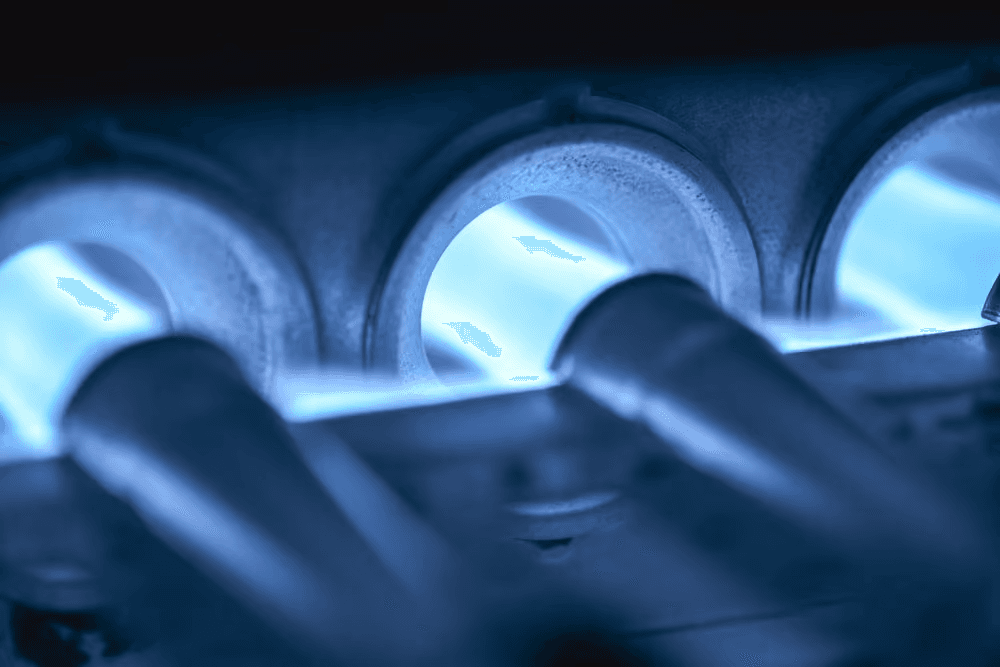
A furnace heat exchanger separates combustion gases from your home's air supply, making cracks a serious safety hazard that can leak dangerous carbon monoxide. Warning signs like yellow flames, soot, unusual odors, or a triggered CO alarm require immediate professional inspection. Never attempt a DIY fix, as a cracked heat exchanger poses severe risks and requires expert evaluation.
On this page:
What Does a Furnace Heat Exchanger Do?
10 Signs That May Indicate a Cracked Heat Exchanger
What Causes a Furnace Heat Exchanger to Crack?
How Serious Is a Cracked Heat Exchanger?
Professional Furnace Heat Exchanger Inspection
Can a Cracked Heat Exchanger Be Repaired?
How to Help Prevent Heat Exchanger Problems
Quick Reference: Potential Warning Signs
Why Homeowners Choose Hutchinson
Furnace Help Across New Jersey, Pennsylvania, and Delaware
Frequently Asked Questions
Most homeowners turn on their furnace without thinking about what happens inside the system. One of the furnace's most important components is the heat exchanger, which transfers heat from the combustion process to the air that circulates through your home while helping keep combustion gases separated from that air.
If the heat exchanger develops a crack or other breach, combustion gases can potentially enter the air stream. Because those gases can include carbon monoxide, a damaged heat exchanger can create a serious safety concern.
This guide explains what a furnace heat exchanger does, 10 signs that may indicate a problem, what can cause heat exchanger damage, the potential safety risks, and what to do if you suspect your furnace's heat exchanger is cracked.
Hutchinson provides heating services throughout New Jersey, Pennsylvania, and Delaware, including communities like Cherry Hill, Burlington, West Chester, Philadelphia, and Wilmington, offering furnace repair, maintenance, replacement, and emergency heating services. If you notice unusual furnace behavior or suspect a heat exchanger problem, our team can inspect your system and help determine the safest next step.
What Does a Furnace Heat Exchanger Do?
A furnace heat exchanger is a metal component that separates the combustion process from the air circulated throughout your home. In a gas furnace, burners produce heat inside the combustion area. The heat exchanger absorbs that heat, and the blower moves household air across the outside of the heated surfaces before distributing the warmed air through your ductwork.
Combustion gases are then directed through the furnace's venting system and outside the home.
This separation is critical because it helps prevent combustion gases from entering the air supplied to your living spaces.
A heat exchanger can experience stress over many years of heating cycles. Thermal expansion and contraction, corrosion, overheating, airflow problems, and combustion issues can contribute to deterioration.
10 Signs That May Indicate a Cracked Heat Exchanger
The symptoms below can be associated with a cracked heat exchanger, but none of them can confirm a crack on their own. Several can also result from other furnace, combustion, airflow, or venting problems.
If you notice one or more of these warning signs, turn off the furnace and arrange for a professional inspection.
1. Yellow or Flickering Burner Flame
A properly operating gas furnace generally produces a steady blue flame. A yellow, unstable, or flickering flame can indicate incomplete combustion, burner problems, or an issue affecting the furnace's combustion process.
A flame abnormality does not automatically mean the heat exchanger is cracked, but it is a combustion warning sign that should be evaluated by a trained and licensed professional.
2. Soot or Carbon Buildup
Black or dark deposits around the burners or inside the furnace can indicate incomplete combustion. Dirty burners, incorrect gas pressure, restricted airflow, and other problems can contribute to soot formation.
Because combustion problems can also accompany heat exchanger damage, visible soot should not be ignored. Turn off the system and have the furnace professionally inspected.
3. Rust or Corrosion
Rust or corrosion on the heat exchanger, burners, or surrounding furnace components can indicate prolonged exposure to moisture or combustion byproducts.
Corrosion does not confirm that the heat exchanger is cracked, but significant deterioration can weaken metal components over time. A professional inspection can determine whether corrosion has affected the heat exchanger or other parts of the system.
4. Unusual Odors
Unusual smells coming from a furnace can have several causes. Burning dust can create an odor when the furnace starts for the first time each heating season, while electrical or mechanical problems can create other smells.
Persistent chemical, metallic, or burning odors should be evaluated rather than ignored. If you suspect combustion gases are entering your home, shut off the furnace, leave the area if necessary, and seek professional assistance.
5. Water or Condensation Around the Furnace
Water around a furnace can point to a condensate drain problem, venting issue, equipment malfunction, or another source of moisture.
High-efficiency furnaces naturally produce condensate, so water alone does not indicate a cracked heat exchanger. However, persistent moisture can contribute to corrosion and should be inspected to determine its source.
6. Carbon Monoxide Detector Alarm
If a carbon monoxide detector sounds while your furnace is operating, take the alarm seriously.
Carbon monoxide is colorless and odorless, and exposure can cause symptoms such as headaches, dizziness, nausea, weakness, and confusion. A CO alarm does not specifically identify a cracked heat exchanger, but it can indicate a dangerous combustion or venting problem.
If your CO alarm sounds, leave the home and move to fresh air. Contact emergency services as appropriate and do not return until it is determined to be safe. Have the furnace professionally inspected before operating it again.
7. Visible Cracks, Holes, or Discoloration
A damaged heat exchanger may show visible cracks, holes, warping, burn-through, or unusual discoloration.
These problems can be difficult to identify without specialized equipment. During an inspection, a professional may use mirrors, inspection cameras, or a borescope to examine areas that are difficult to see.
Never remove sealed furnace panels or attempt to inspect internal combustion components yourself.
8. Illness-Like Symptoms When the Furnace Runs
Headaches, dizziness, nausea, fatigue, weakness, confusion, and other flu-like symptoms can be associated with carbon monoxide exposure.
If symptoms occur while the furnace is operating and improve after leaving the home, move to fresh air and seek immediate assistance. Do not assume the symptoms are caused by a cracked heat exchanger because carbon monoxide can result from several combustion and venting problems.
9. Unusual Popping, Pinging, or Rattling
Some furnaces naturally make sounds as metal components expand and contract during heating and cooling.
A sudden change in the sounds coming from your furnace, particularly loud popping, pinging, or rattling, can indicate a mechanical or combustion problem. These sounds do not specifically confirm a cracked heat exchanger, but they are worth having a professional evaluate.
10. Reduced Heat Output or Short Cycling
A furnace that struggles to heat your home or repeatedly turns on and off may be experiencing an airflow, thermostat, combustion, or safety-control problem.
A damaged heat exchanger can contribute to overheating and safety-limit shutdowns, but short cycling has many possible causes. If your furnace is frequently cycling or failing to provide adequate heat, schedule a professional diagnostic inspection.
What Should You Do If You Suspect a Cracked Heat Exchanger?
A cracked heat exchanger is not a DIY repair. If you notice multiple warning signs or suspect combustion problems, stop using the furnace and seek professional assistance.
If a CO alarm sounds or anyone in the home experiences symptoms associated with carbon monoxide exposure, leave the home and contact emergency services as appropriate.
What Causes a Furnace Heat Exchanger to Crack?
Heat exchangers are exposed to repeated heating and cooling cycles throughout their service life. Several conditions can contribute to deterioration or cracking.
Thermal Stress and Metal Fatigue
Each heating cycle causes the heat exchanger's metal to expand and contract. Over many years, this repeated movement can contribute to metal fatigue, particularly around seams, bends, and other areas exposed to repeated thermal stress.
Corrosion and Moisture
Moisture can contribute to corrosion and deterioration of metal components. Condensate problems, water leaks, venting issues, and other moisture-related conditions can increase the risk of corrosion.
Improper Combustion
Incorrect gas pressure, burner problems, insufficient combustion air, or other combustion issues can create abnormal operating conditions and excessive heat in certain areas of the furnace.
These conditions can place additional stress on the heat exchanger over time.
Poor Airflow and Maintenance Problems
Restricted airflow can cause a furnace to operate under excessive heat. Dirty filters, blocked vents, dirty blower components, and other airflow restrictions can contribute to overheating and increased equipment stress.
Regular furnace maintenance can help identify airflow and combustion problems before they lead to more significant damage.
Frequent Cycling or Improper Equipment Sizing
A furnace that turns on and off frequently experiences repeated heating cycles. Oversized equipment can short cycle because it heats the home too quickly, while thermostat or airflow problems can also cause frequent cycling.
A professional can determine the cause of short cycling and recommend the appropriate solution.
Installation and Venting Problems
Improper installation, inadequate combustion air, venting problems, or incorrect system setup can affect how a furnace operates and may contribute to premature equipment deterioration.
Professional installation and regular inspections can help identify these problems early.
How Serious Is a Cracked Heat Exchanger?
A cracked heat exchanger can create a serious safety concern because combustion gases may enter the air circulated through the home.
Carbon monoxide exposure can cause serious illness and, at high concentrations, can be fatal. A cracked heat exchanger is not the only possible source of carbon monoxide in a home, so professional testing is necessary to determine the cause of any suspected combustion-gas problem.
If you suspect a cracked heat exchanger, shut down the furnace and have it professionally inspected before operating it again.
Professional Furnace Heat Exchanger Inspection
A cracked heat exchanger can be difficult to identify through a basic visual inspection. Professional furnace diagnostics may include several steps.
Visual Inspection
A technician can inspect accessible areas for cracks, corrosion, burn-through, discoloration, warping, and other signs of damage. Inspection cameras or borescopes may help identify areas that are difficult to see directly.
Combustion Analysis
Combustion testing can help evaluate how efficiently and safely the furnace is burning fuel. A professional can assess combustion conditions and identify abnormal readings that may require further investigation.
Carbon Monoxide and Flue Gas Testing
Testing can help identify unsafe combustion conditions and determine whether carbon monoxide or other combustion gases are present where they should not be.
Venting and System Evaluation
The technician may also evaluate the furnace's venting, airflow, burners, safety controls, and other components to determine what is causing the symptoms.
A proper diagnosis is important because symptoms such as soot, yellow flames, short cycling, and unusual odors can have multiple causes.
Can a Cracked Heat Exchanger Be Repaired?
In some cases, a damaged heat exchanger can be repaired without replacing the entire furnace. The appropriate solution depends on the furnace's age, overall condition, warranty coverage, replacement-part availability, labor costs, and the condition of the rest of the system.
When Heat Exchanger Replacement May Make Sense
Replacing the heat exchanger may be worth considering when the furnace is relatively new, the rest of the system is in good condition, and the replacement component is available and covered by warranty.
Manufacturer warranty coverage varies, so homeowners should review their furnace documentation or ask a professional to verify coverage.
When Furnace Replacement May Be the Better Option
Replacing the furnace may make more sense when the system is older, has multiple significant problems, requires expensive repairs, or has reached the end of its expected service life.
A professional can compare the cost and expected service life of the available options and help determine the most practical solution.
Do not attempt to seal, patch, weld, or otherwise repair a cracked heat exchanger yourself. Temporary fixes are not an appropriate substitute for properly replacing the damaged component or replacing the furnace when necessary.
How to Help Prevent Heat Exchanger Problems
No maintenance plan can guarantee that a heat exchanger will never crack, but proper furnace care can reduce equipment stress and help identify developing problems.
Replace air filters regularly. Dirty air filters can restrict airflow and contribute to overheating.
Keep supply and return vents unobstructed. Restricted airflow can affect furnace performance.
Schedule professional heating maintenance. Regular inspections can identify airflow, combustion, venting, and safety problems.
Address short cycling. Frequent cycling can indicate a thermostat, airflow, sizing, or equipment problem.
Keep the furnace area clear. Follow manufacturer requirements for clearances and combustion air.
Address moisture problems promptly. Persistent water or condensation around the furnace should be professionally evaluated.
Have unusual furnace behavior inspected. New noises, odors, soot, or heating problems can indicate an issue that should not be ignored.
For homeowners in New Jersey, Pennsylvania, and Delaware, Hutchinson provides heating maintenance, furnace repair, furnace replacement, and emergency heating services.
Quick Reference: Potential Warning Signs
What to Watch For | What It May Indicate | What to Do |
Yellow or flickering flame | Combustion or burner problem | Turn off the furnace and schedule an inspection |
Soot or carbon buildup | Incomplete combustion or equipment issue | Stop using the furnace and request professional evaluation |
Rust or corrosion | Moisture or metal deterioration | Have the source and affected components inspected |
Water or condensation | Drainage, venting, or equipment problem | Identify and address the source of moisture |
CO detector alarm | Potential carbon monoxide exposure | Leave the home and seek emergency assistance |
Illness-like symptoms | Possible CO exposure or another issue | Move to fresh air and seek immediate assistance |
Visible cracks or discoloration | Possible heat exchanger damage | Do not operate the furnace until professionally evaluated |
Unusual furnace noises | Mechanical or combustion problem | Schedule professional diagnostic service |
Short cycling or poor heat | Airflow, safety, thermostat, or equipment issue | Have the furnace inspected |
Why Homeowners Choose Hutchinson
When a furnace problem could affect your family's safety, you want a heating company with the experience and resources to diagnose the issue correctly.
Hutchinson has served homeowners throughout New Jersey, Pennsylvania, and Delaware since 1948, providing furnace repair, heating maintenance, furnace replacement, and emergency heating services throughout the region.
Homeowners choose Hutchinson for:
Experienced heating professionals: Hutchinson has decades of experience servicing residential heating systems.
Professional diagnostics: Our team can evaluate furnace operation, combustion, airflow, venting, and other potential sources of heating problems.
Clear repair and replacement options: If a heat exchanger or another major component has failed, Hutchinson can explain the available solutions.
24/7 emergency service: Heating emergencies can happen at any time, and Hutchinson offers 24/7 emergency service.
Local service: Hutchinson serves homeowners across New Jersey, Pennsylvania, and Delaware.
Furnace Help Across New Jersey, Pennsylvania, and Delaware
A cracked heat exchanger can be difficult to identify without professional equipment, and many of its warning signs can also point to other furnace problems. If you notice soot, unusual odors, a yellow flame, unexplained short cycling, poor heating performance, or other changes in furnace operation, do not ignore them. If a carbon monoxide alarm sounds or someone experiences possible CO symptoms, leave the home and seek immediate assistance.
For furnace problems that require professional diagnosis, Hutchinson provides heating services throughout New Jersey, including Burlington, Cherry Hill, Deerfield, Gloucester, Kirkwood, Mount Royal, Ocean City, Port Republic, Salem, and Trenton; Pennsylvania, including Berwyn, Belmont Hills, Haverford, King of Prussia, Philadelphia, Springfield, and West Chester; and Delaware, including Delaware City, Edgemoor, New Castle, and Wilmington. Our team can inspect your furnace, identify the source of the problem, and explain your options for repair or replacement.
Suspect a furnace problem? Whether you are located in New Jersey, Pennsylvania, or Delaware, schedule a professional furnace repair with Hutchinson for expert diagnosis and service.
Frequently Asked Questions
Can you run a furnace if you suspect the heat exchanger is cracked?
No. If you suspect a cracked heat exchanger or another serious combustion problem, turn off the furnace and arrange for a professional inspection. If a carbon monoxide alarm sounds or anyone experiences possible CO symptoms, leave the home and seek immediate assistance.
Is a yellow furnace flame always a sign of a cracked heat exchanger?
No. A yellow flame can result from dirty burners, incorrect gas pressure, insufficient combustion air, or other combustion problems. It should still be treated as a warning sign that requires professional evaluation.
Can you seal or patch a cracked heat exchanger?
No. Homeowners should not attempt to seal, patch, weld, or otherwise repair a cracked heat exchanger. A professional should determine whether the heat exchanger can be properly repaired or if replacing the furnace is the better option.
Will a carbon monoxide detector catch every furnace problem?
No. Carbon monoxide detectors are an important safety device, but they do not identify every furnace or combustion problem. A detector may not alert you to every developing issue, so proper furnace maintenance and professional inspections remain important.
Install CO detectors according to manufacturer instructions, test them regularly, and replace them according to the manufacturer's recommended schedule.
How long does a furnace heat exchanger last?
Heat exchanger lifespan varies based on furnace design, installation, operating conditions, maintenance, corrosion, and other factors. There is no single lifespan that applies to every furnace. Regular professional maintenance can help identify deterioration and other furnace problems before they become more serious.
Related Articles
What do you need help with today?
Heating
No heat, strange smells, rising bills? We repair and replace heating systems to keep your home reliably warm.
Air Conditioning
AC blowing warm air? Uneven cooling in your rooms? We fix cooling issues fast and keep your system running smoothly all summer.
Plumbing
Our highly trained plumbers handle it all, from leaky faucets to full system installations and repipes.
Electrical
The smartest team in town. You need repair, installations, wiring, inspections, lighting — you name it.