
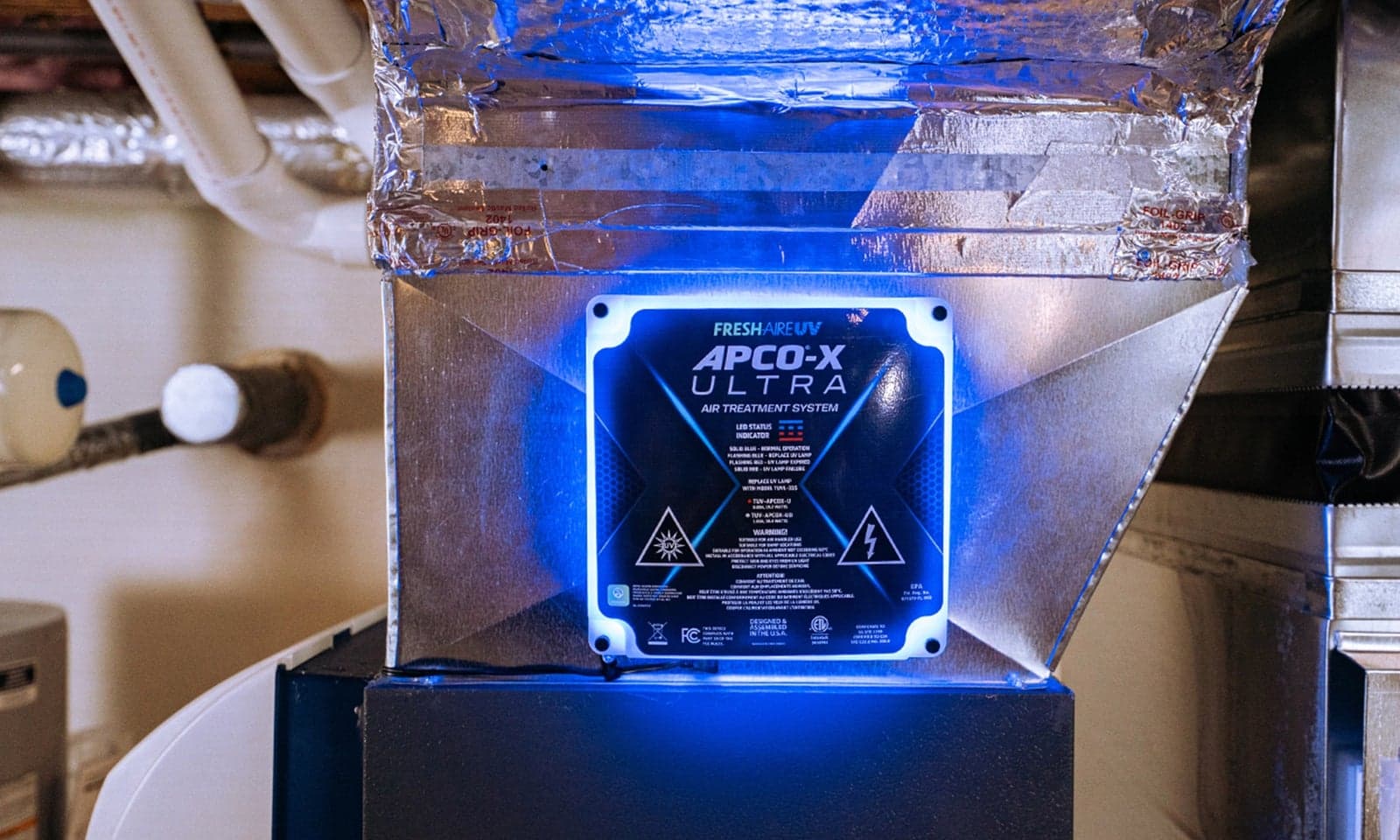
UV-C lights in HVAC systems effectively curb microbial growth on components and inactivate airborne pathogens, improving system cleanliness and indoor air quality. However, they do not remove dust or particulate matter, require regular bulb replacements, and must be professionally installed alongside adequate filtration and humidity control for optimal results.
On this page:
How UV-C Lights Work in HVAC Systems
Pros of Installing UV Lights in Your HVAC System
Cons and Limitations of HVAC UV Lights
Is a UV Light Right for Your Home?
How to Evaluate the Value of UV Lighting
UV Light Installation and Maintenance
UV Lighting, Filtration and Humidity Control
UV Light Options at a Glance
Trust Hutchinson for HVAC UV Light Installation
Frequently Asked Questions
UV-C lights can help limit microbial growth on HVAC surfaces and, when properly designed, can inactivate certain microorganisms in passing air. However, UV lighting is not a replacement for filtration, humidity control or routine HVAC maintenance.
This guide explains how UV-C lights work, their potential benefits and limitations, and how to determine if a UV light is right for your home. Hutchinson provides HVAC and indoor air quality services throughout Pennsylvania, New Jersey and Delaware, including the Greater Philadelphia region, South Jersey and Northern Delaware.
How UV-C Lights Work in HVAC Systems
Residential HVAC UV-C systems typically use ultraviolet light near the 254-nanometer wavelength to disrupt the genetic material of microorganisms. This can prevent certain microorganisms from reproducing or inactivating them when sufficient UV exposure is delivered.
UV effectiveness depends on several factors, including lamp intensity, exposure time, placement, airflow and the type of microorganism being targeted. A UV lamp that treats a surface continuously has much more exposure time than one attempting to treat air moving rapidly through an air duct.
Two common HVAC UV applications include:
Coil-Mounted UV Lights
Coil-mounted UV lights are installed near the evaporator coil and drain pan. Their primary purpose is to help control microbial growth on HVAC surfaces, including the buildup that can contribute to odors and reduced heat transfer.
This approach can be useful in humid environments where moisture around the coil and drain pan creates conditions that support microbial growth. That can be particularly relevant for homes throughout South Jersey, southeastern Pennsylvania and Delaware.
In-Duct UV Lights
In-duct UV lights are installed in a supply or return plenum or duct. They are designed to expose microorganisms in moving air to UV-C light.
Because air moves through the system relatively quickly, effectiveness depends heavily on delivering an adequate UV dose. Lamp intensity, placement, airflow and exposure time all affect results.
UV-C does not remove dust, pollen or other particles from the air. Properly sized filtration remains an important part of a complete indoor air quality strategy.
Pros of Installing UV Lights in Your HVAC System
When properly selected and installed, UV-C lighting can offer several benefits.
Helps Control Microbial Growth
UV-C irradiation can help limit microbial growth on HVAC surfaces. Keeping the evaporator coil and surrounding components cleaner may help reduce the buildup associated with some odors and maintenance issues.
Can Inactivate Certain Airborne Microorganisms
In-duct UV-C systems can inactivate certain microorganisms that pass through the treated area. Results depend on the UV dose and the specific microorganism.
UV works alongside filtration rather than replacing it. Filters capture particles, while UV-C targets certain microorganisms.
Supports Cleaner HVAC Components
A cleaner evaporator coil can help maintain heat transfer and airflow. UV lighting may help reduce the buildup that can otherwise accumulate on damp HVAC surfaces.
Works as Part of a Layered Indoor Air Quality Strategy
UV-C is most useful when it is combined with other measures, such as appropriate filtration, humidity control, ventilation and routine HVAC maintenance.
A Hutchinson professional can evaluate your HVAC equipment and indoor air quality needs to determine which combination makes sense for your home.
Cons and Limitations of HVAC UV Lights
UV-C lighting can be useful, but it is not a universal solution. Consider these limitations before investing in a system.
UV Dose and Exposure Time Matter
A UV lamp does not automatically provide effective treatment throughout an entire HVAC system. Air moving quickly through ductwork has limited exposure time, so lamp intensity and placement are critical.
UV Does Not Remove Airborne Particles
UV-C does not capture dust, pollen, pet dander or other particulate matter. Filtration is still necessary to remove these pollutants from the air.
An air filter should be selected based on both filtration needs and the HVAC system's airflow requirements. Higher-efficiency filtration is not appropriate for every system without considering pressure drop and equipment performance.
Installation and Maintenance Have Costs
UV systems require professional installation and ongoing maintenance. Lamps eventually need to be replaced, often according to a manufacturer's specified interval that can range from roughly 9 to 24 months depending on the product and operating conditions.
Some systems also require periodic cleaning of the lamp or quartz sleeve to maintain performance.
UV-C Requires Proper Safety Measures
Direct exposure to UV-C can harm the eyes and skin. HVAC UV systems should be installed inside enclosed equipment or ductwork with appropriate shielding and safety features.
UV-C can also degrade certain plastics and other materials over prolonged exposure. Proper lamp placement and equipment selection help minimize these risks.
Is a UV Light Right for Your Home?
The best way to evaluate UV lighting is to start with the problem you want to solve.
UV Lighting May Make Sense If You Have:
Visible microbial buildup on HVAC coils or drain pans
Persistent musty HVAC odors
Moisture or humidity concerns
A desire for additional microbial control
An HVAC system that operates for extended periods
UV Lighting May Be Less Useful If:
Your primary concern is dust, pollen or other airborne particles
Your HVAC system already has appropriate filtration and humidity control
You have no signs of microbial growth or odor
Your system has limited runtime or airflow conditions that make UV exposure less effective
A professional HVAC assessment can help determine if UV-C addresses an actual need or if another indoor air quality solution would be more appropriate.
How to Evaluate the Value of UV Lighting
Consider the complete cost and expected purpose of the system rather than assuming UV lighting will pay for itself.
Factors to evaluate include:
Installation cost
Lamp replacement requirements
Electrical consumption
Existing filtration and humidity control
The condition of your HVAC coil and drain pan
The type and placement of the UV system
Your primary indoor air quality concerns
Coil-mounted systems are generally focused on HVAC surface treatment, while in-duct systems are designed to expose microorganisms in moving air to UV-C. The right option depends on your equipment, goals and home.
UV Light Installation and Maintenance
Professional Installation Is Recommended
An HVAC professional can determine appropriate lamp placement, evaluate airflow and equipment configuration, verify electrical requirements, and ensure the system has proper shielding and safety features.
Professional installation also helps protect nearby HVAC components from unnecessary UV exposure and ensures the equipment is installed according to manufacturer requirements and applicable codes.
Routine UV Maintenance
Follow the manufacturer's maintenance instructions and:
Replace lamps at the recommended interval.
Clean accessible lamps or quartz sleeves as directed.
Check safety switches, indicators and protective components.
Inspect nearby wiring and materials for signs of UV-related wear.
Shut off power and follow appropriate safety procedures before servicing.
UV Lighting, Filtration and Humidity Control
UV-C works best as part of a broader indoor air quality strategy. Filtration helps capture airborne particles, while humidity control helps manage moisture and UV-C can provide an additional approach to microbial control.
The right combination depends on your home's HVAC equipment, airflow, existing filtration and indoor conditions. Hutchinson can evaluate these factors for homeowners throughout the Greater Philadelphia area, South Jersey and Northern Delaware.
UV Light Options at a Glance
Type | Primary Purpose | Placement | Key Benefit | Key Consideration |
Coil-mounted UV | Help control microbial growth on HVAC surfaces | Near evaporator coil and drain pan | Helps keep HVAC surfaces cleaner | Does not remove airborne particles |
In-duct UV | Expose microorganisms in moving air to UV-C | Supply or return plenum/duct | Can inactivate certain microorganisms | Requires adequate UV dose and exposure time |
Trust Hutchinson for HVAC UV Light Installation
If you're considering UV lighting, Hutchinson can evaluate your HVAC system, indoor air quality concerns and existing equipment to determine if UV-C is an appropriate solution.
Our team can assess your coil configuration, duct layout, airflow, filtration, humidity and signs of microbial growth or odors. Based on those findings, we can recommend an appropriate solution, such as a coil-mounted system for surface treatment or an in-duct system for treating moving air.
Hutchinson serves homeowners throughout Pennsylvania, New Jersey and Delaware, including areas such as Philadelphia, Allentown, and Claymont.
Custom System Assessment
We evaluate your HVAC equipment and indoor conditions before recommending a UV solution. This helps ensure the system is properly matched to your equipment and intended purpose.
Ongoing Maintenance and Support
Hutchinson can provide ongoing HVAC service and help maintain your UV system according to manufacturer recommendations, including lamp replacement and system inspections.
Frequently Asked Questions
Are HVAC UV lights safe?
HVAC UV-C systems are designed to operate inside enclosed air handlers or ductwork. Proper shielding and safety features help prevent occupants from being exposed to UV-C. Homeowners should never look directly at an energized UV-C lamp or operate an exposed system.
Do UV lights address viruses?
UV-C can inactivate certain viruses by damaging their genetic material. Effectiveness depends on factors such as UV intensity, exposure time, airflow and the specific virus. UV-C should be considered alongside filtration and other indoor air quality measures rather than as a standalone solution.
How often do HVAC UV bulbs need to be replaced?
Many UV-C lamps require replacement about every 9 to 24 months, but the correct interval depends on the lamp and manufacturer's specifications. Routine HVAC service can be a convenient time to inspect the lamp and replace it when needed.
Related Articles
What do you need help with today?
Heating
No heat, strange smells, rising bills? We repair and replace heating systems to keep your home reliably warm.
Air Conditioning
AC blowing warm air? Uneven cooling in your rooms? We fix cooling issues fast and keep your system running smoothly all summer.
Plumbing
Our highly trained plumbers handle it all, from leaky faucets to full system installations and repipes.
Electrical
The smartest team in town. You need repair, installations, wiring, inspections, lighting — you name it.